5 Worlds of Breath Work – a Personal Journey with Useful Information (part 2 of 2)

“We too should make ourselves empty, that the great soul of the universe may fill us with its breath.”
“Breathing involves a continual oscillation between exhaling and inhaling, offering ourselves to the world at one moment and drawing the world into ourselves at the next…”
“Remember your breath… It has the power to resolve the unsolved equations of life.”
-Amit Ray
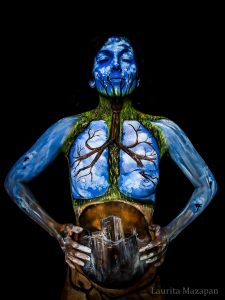 This article will look at three types of breathwork relevant for the modern human, specifically:
- Taoist Longevity
- Holotropic/Rebirthing
- Wim Hof Method
(We touched on Vipassana and Pranayama in part one )
There will be a blend of my own experience, the words of those who have gone before, and practical resources for those of you who wish to study further. Enjoy!
Taoist Longevity
“Beautify your breath – beautify your life.” – Amit Ray
“For the Taoist, the conscious cultivation of breath offers a powerful way not only to extract energies from the outside world but also to regulate the energetic pathways of our inner world… when we are able to breathe through our whole body, sensing our verticality from head to foot, we are aligning ourselves with the natural flow of energy connecting heaven and earth.
Each breath we take is filled not only with the nutrients and energies we need for life, but also with the expansive, open quality of space [which] can help us open to deeper levels of our own being and to our own inner powers of healing…”
– Dennis Lewis
“Efforts to change our breathing can bring great harm…”
– G. I. Gurdjieff
The time I spent developing Pranayama (see part 1) signalled a change in direction. Until that point, my studies and explorations had been largely focused on what arose from the Indian Subcontinent: Asana, Pranayama, Mantra and Ayurveda (the indian science of health, literally: ‘life knowledge’), Vipassana and other meditations from the Buddhist tradition; plus a (fruitful) foray into Osho Meditations.
Over the months and years that followed, I moved into resonance with that which appeared in (what is now called) China: Taoism, Qi Gong and Chinese Medicine.
I continue to draw from each of these every day. Thank you to those men and women who have recorded this wisdom!
The type of Taoist breathing I practice is informed largely (but not entirely) by the Longevity Breathing of Bruce Frantzis. It is a gentle, expansive and gradual method, emphasising smooth, unbroken cycles of breath.
Combined with qi gong, dance and strength work, I find it highly effective at balancing my inner systems and inviting a sense of love into my outer world.
Also, unlike many other breathing strategies, it can be performed all day (for example, during office work or long journeys) without strain. For more details, check out the resources below.
Gold: The focus is on sustainable progress, downward energy movement (grounding) and self-reliance
Challenges: May not be stimulating enough for some; requires consistent focus and determination; progress may be slow
Resources:
- The works of Mantak Chia – somewhat entry-level and crudely illustrated, but still pretty good
- Dennis Lewis’ The Tao of Natural Breathing
- Chronicles of Tao by Deng Ming Dao – a biography/novel with incredible knowledge within
- Opening the Dragon Gate by Kaiguo Chen
- Taoist Longevity Breathing
Holotropic/Rebirthing
“Uncomplicated birth seems to be the blueprint for coping with all later difficult situations in life”
– Stanislav Grof
“…the desire for perfection is that desire which always makes every pleasure appear incomplete, for there is no joy or pleasure so great in this life that it can quench the thirst in our soul…”
My first experience with Holotropic Breathing (HB) was EXTREMELY POWERFUL. I had to stop halfway through the sequence, as I was feeling far more energy than at any previous moment – including love-making, sports and meditation – so much, in fact, that I feared my circuitry would burn out.
It was frightening, bewildering and utterly compelling.
HB entails a combination of deep and rapid breath patterns, evocative music and focused bodywork. It is often used as a therapeutic strategy in the release of fear, tension and so on, and also to access non-ordinary states of consciousness.
It was developed by Stan Grof and his wife Christina. If you study HB, their interest in entheogens and conscious sexuality is readily apparent alongside the breathwork.
For another point of view, here is a profound critique of HB and the idea that one can ‘skip ahead’ in spiritual practice.
Rebirthing Breathwork or simply Breathwork is a broadly similar modality, yet there are key differences: No music or specific movements and the breathing pattern is often slower.
Breathwork began as a breathing technique to be followed while submerged in the bath in order to trigger a reliving of the first moments of one’s life.
As the modality was explored further, it moved onto dry land and the ‘rebirthing’ aspect was seen as just one possible experience, hence its rebranding as Breathwork.
From its pioneer, Leonard Orr:
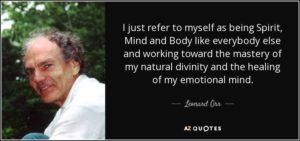
He has also said: “Breathwork is the practice breathing energy, as well as air”.
I have participated in many Breathwork circles and had some fairly profound experiences/releases. As it is usually performed in groups – and always with a guide – sound leadership and a supportive space are crucial.
Again, as with HB, the difficulty can be that one has an unprecedented, transcendent experience, a taste of the divine, or immortality, or freedom, yet it may not be accompanied by realization, understanding or integration, which might lead to emotional and psychological difficulties afterwards.
If you’re attracted by the idea of HB/Rebirthing, find a solid group in your area who will support you in the weeks after the session, particularly if your friends would not understand spiritual anxiety. Failing that, there are many mp3s and guided sequences available on the subject. Go carefully!
Gold: Chainsaw-like power; reliably induced non-ordinary consciousness; group work can be extremely rewarding
Challenges: Chainsaw-like power; experience without journey or understanding may create anxiety/spaced-outness
Resources:
What is Rebirthing Breathwork?
Wim Hof Method
“If you can learn how to use your mind, anything is possible.”
– Wim Hof
“Challenges bring about the true nature within me. It alerts my body and mind, altering my state of being. It makes me feel so alive! It’s like I always say, “We can do more than what we think.” At those moments when I encounter a challenge, I become extremely aware of the deeper layers of my soul.”
– Wim Hof
I first heard this extraordinary man on a podcast, where he was being interviewed about his world records (20+), workout routine (“I lift a few nice rocks”) and elite dietary system (“Well… I like spaghetti!”).
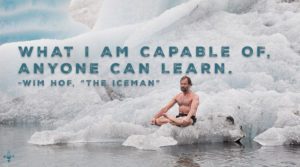
Wim Hof – or, The Iceman – has many modern humans drooling over his abilities, which include superhuman levels of resistance to cold and heat, controlling inflammation and immune response and generally being a heart-centred dutch legend.
Wim’s method is simple to learn. He offers paid courses on his website; I learned from watching his videos and following a free guide.
What occurs during Wim’s breathing exercises is a consistent increase of blood PH – thus temporarily negating the need to breathe, as oxygen is required only to balance out the blood’s PH.
In my experience, after a minute or two in this suspended, ‘no breath’ state, there comes a deep tranquility, and with it an array of physiological benefits.
Gold: Simple, demystified techniques; Can be learned quickly; Promotes direct experience without dogma
Challenges: Potentially fatal if practiced incorrectly (e.g. while driving or under water); its simplicity may not satisfy or convince the curious mind.
Resources:
Interview with Functional Patterns
That’s it for this series on Breathwork. My current practice includes breathing into my left side (as I’ve always felt it less ‘aware’ than the right), Taoist Longevity Breathing and heart-breathing, as well as many non-breath specific modalities like yoga, qi gong, dance, strength work and self-massage. What is yours?